A platter of fish, rice and vegetables can look like a collection of separate foods. In ceebu jën, the cooking connects them: the rice takes up the broth used for the fish and vegetables. That relationship helps explain why describing the Senegalese dish simply as fish served beside rice misses something important.
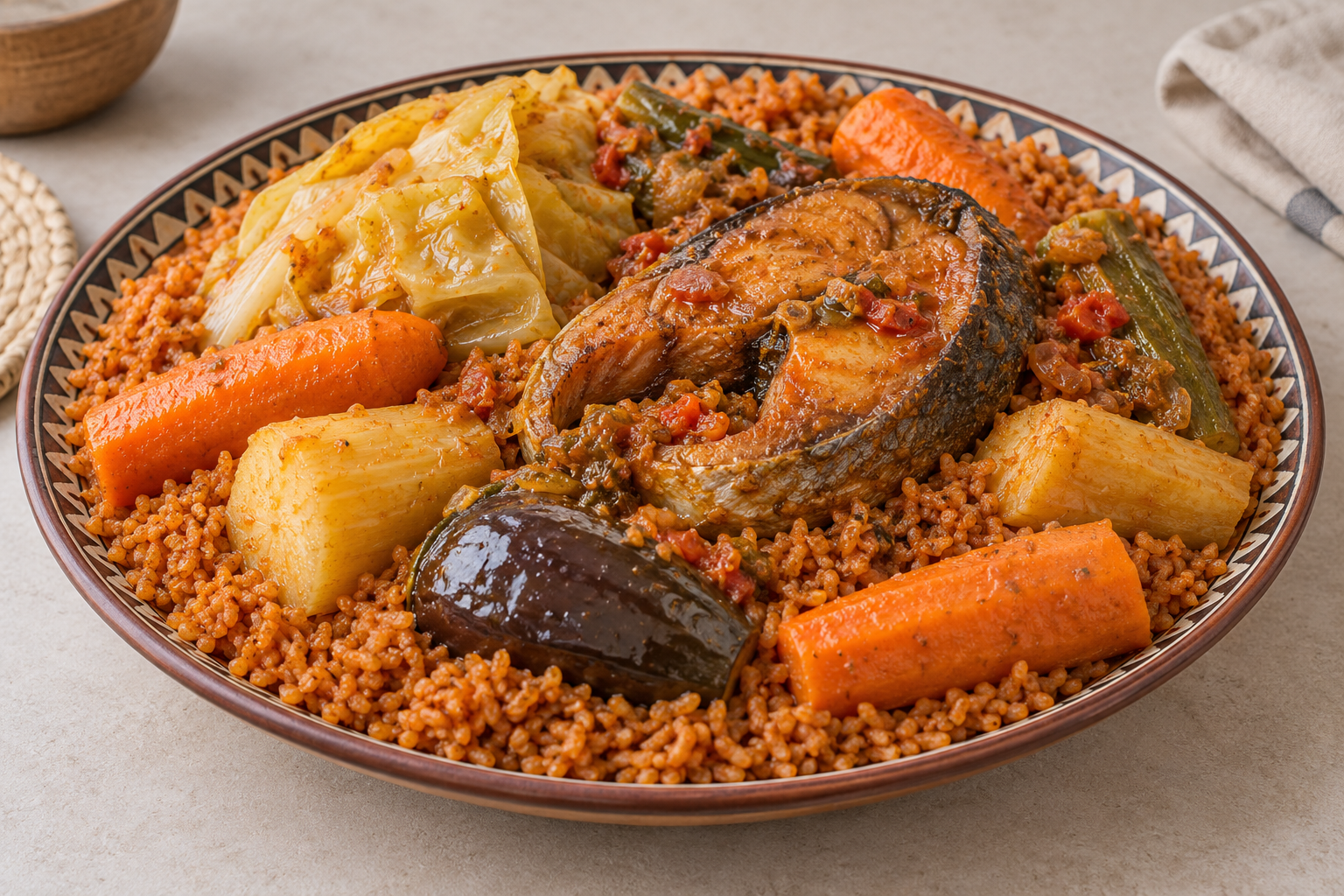
The broth is the connection
The Senegal-based cultural and travel guide Au Sénégal’s recipe cooks fish and vegetables in a seasoned liquid, removes them, then cooks the rice in the remaining broth. This is one documented version, not a universal instruction for every household. The method makes the rice part of the same preparation rather than a neutral side dish.
For someone reading a menu, this offers a useful question: what flavours has the rice absorbed? Looking only at the fish on top can hide the work underneath. This article explains the dish’s structure; it is not a tested recipe, and the linked recipe supplies its own quantities and cooking instructions.
A local history within a national dish
UNESCO’s heritage description locates ceebu jën’s origins in Saint-Louis fishing communities and records variation between regions. Its 2021 inscription decision recognizes a culinary practice, not a requirement that every cook reproduce an identical plate. Au Sénégal also presents it as an emblematic national dish. These descriptions can coexist: a preparation can be strongly associated with a place and still acquire many local forms.
Red rice is not the only version
Au Sénégal distinguishes a white-rice variant prepared without tomato concentrate from its tomato-based recipe. That is a useful correction to the assumption that a plate must have a particular red colour to belong to this culinary family. Ask which version the cook is serving rather than using colour as an authenticity verdict.
UNESCO lists fish, broken rice and seasonal vegetables among the typical components, while explicitly acknowledging regional differences. Its examples include cabbage, carrot, cassava and eggplant. An ingredient list describes possibilities; it does not tell us that every listed vegetable must appear together.
A short guide to reading the platter
Rice: ask how it was cooked and seasoned. Fish: ask what is available rather than assuming a single species is essential. Vegetables: notice which are included, but do not turn one restaurant’s selection into a nationwide rule. Colour: tomato-based and white versions make a simple visual test unreliable.
Hospitality without a rigid script
The heritage account connects ingredient choices with the occasion and the welcome offered to guests. It also describes differences between family and restaurant ways of eating. These observations should not become instructions imposed on every Senegalese diner. As a guest, follow your host’s guidance and ask before assuming how a shared meal should be eaten.
The broader lesson is to pay attention to preparation and relationships together. A dish’s identity can involve technique, ingredients, occasions and the people who teach it. Recognizing variation helps us understand that identity more accurately than searching for one photograph that supposedly defines it.
Continue exploring hospitality
Compare this with the role of food in welcoming guests and Moroccan mint tea and hospitality. These are distinct traditions; the connection is the attention paid to a guest, not a claim that their customs are interchangeable.
Sources and further reading
UNESCO: Ceebu Jën, a culinary art of Senegal; UNESCO inscription decision, 2021; Au Sénégal: recipe and white-rice variation. Source check: October 25, 2026. The UNESCO decision and element page share a nomination record and are not independent accounts; Au Sénégal supplies a separate published recipe. UNESCO text was checked through indexed institutional records; direct retrieval presented a verification screen. No single-inventor story is asserted here.
Prepared with AI assistance for People & Origins using linked sources. Original editorial synthesis, not firsthand reporting, a tested recipe or specialist cultural expertise.


Leave a Reply