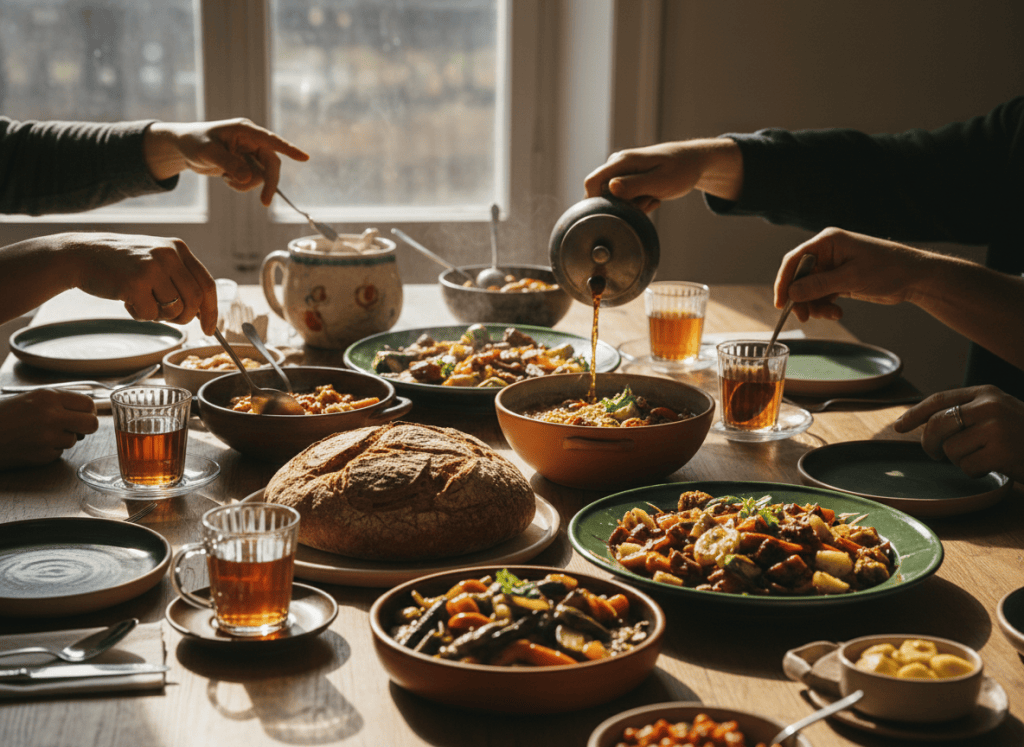
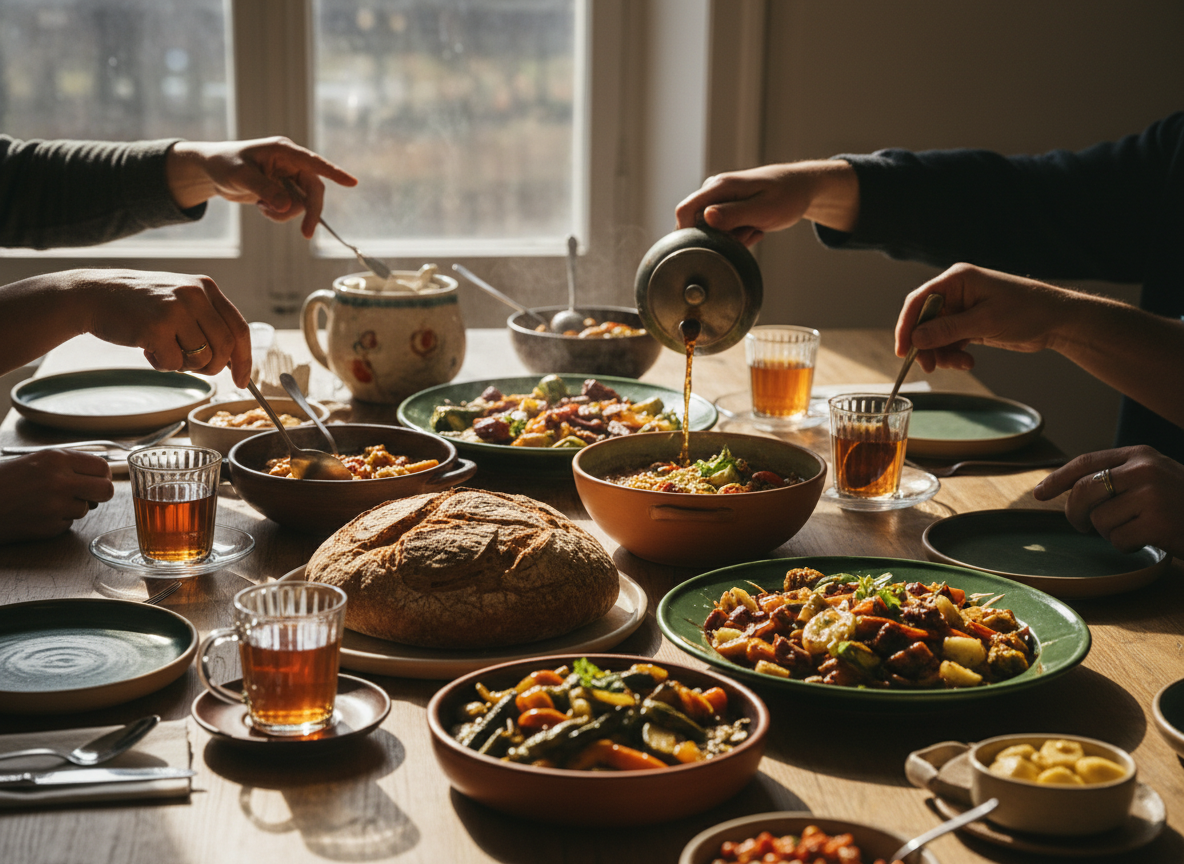
What is the first thing a host offers when you arrive? In many homes around the world, the answer is not a question. It is a cup of tea, a piece of bread or a place at the table.
Food can communicate something that words sometimes cannot: you are welcome here. Yet the customs surrounding that invitation are wonderfully diverse. The details—what is served, who serves it, when a guest accepts—carry their own histories.
1. A table can be a language of belonging
A shared dish can represent care, generosity and the labor of preparation. In some families, hospitality means offering the best food available; in others, it is the ease of inviting someone into an ordinary meal. Neither experience should be reduced to a single national stereotype.
2. The remarkable story of a small glass of tea
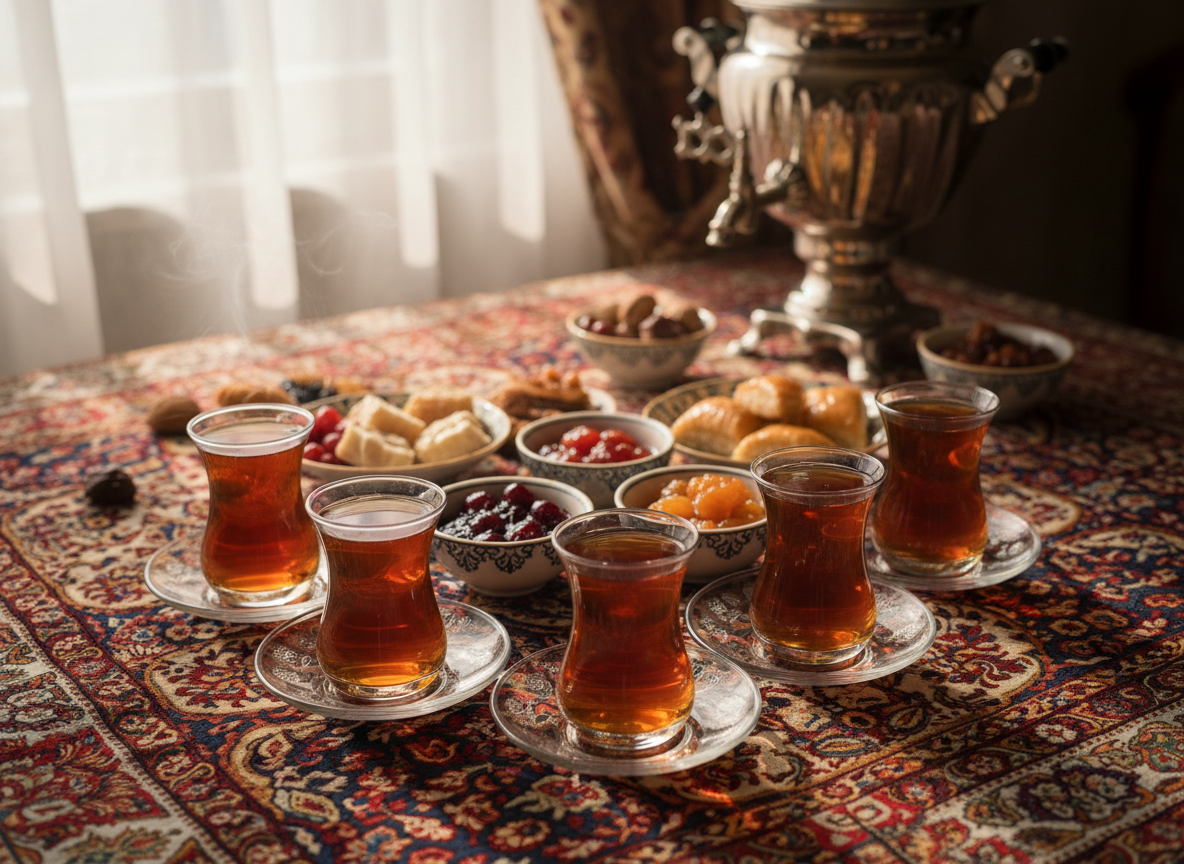
In Azerbaijan and Türkiye, tea culture is an especially clear example of hospitality as living heritage. UNESCO inscribed their shared çay culture on its Representative List of the Intangible Cultural Heritage of Humanity in 2022. Tea is associated with welcoming guests, maintaining relationships and marking important moments.
It is often served hot in distinctive pear-shaped glasses, sometimes accompanied by sweets, jam or dried fruit. Details vary by region, household and occasion.
3. Food traditions travel with people
Recipes rarely stand still. Families move, ingredients become available or scarce, and a beloved dish takes on a new form. The result is not necessarily a loss of authenticity. Often, adaptation is part of the tradition’s living history.
UNESCO emphasizes that culinary heritage is about the knowledge and practices of growing, preparing and sharing food—not simply a famous dish on a plate. That distinction helps us appreciate the people who keep traditions alive.
4. How to be a better guest
Ask about ingredients if you have allergies or dietary restrictions. Follow your host’s cues, and don’t assume that refusing or accepting a serving carries the same meaning everywhere. Most importantly, be curious without treating anyone’s home as a performance.
The deeper takeaway
Hospitality is more than what is served. It is the relationship created in the act of offering and receiving. A simple cup of tea can become a memory of a place—and the beginning of a conversation that lasts far longer than the meal.
Further reading
UNESCO: Culture of Çay · UNESCO: Food and intangible heritage
Images in this article are AI-generated editorial illustrations and do not depict specific documented events.
Explore next: Food & Hospitality · History & Origins


Leave a Reply