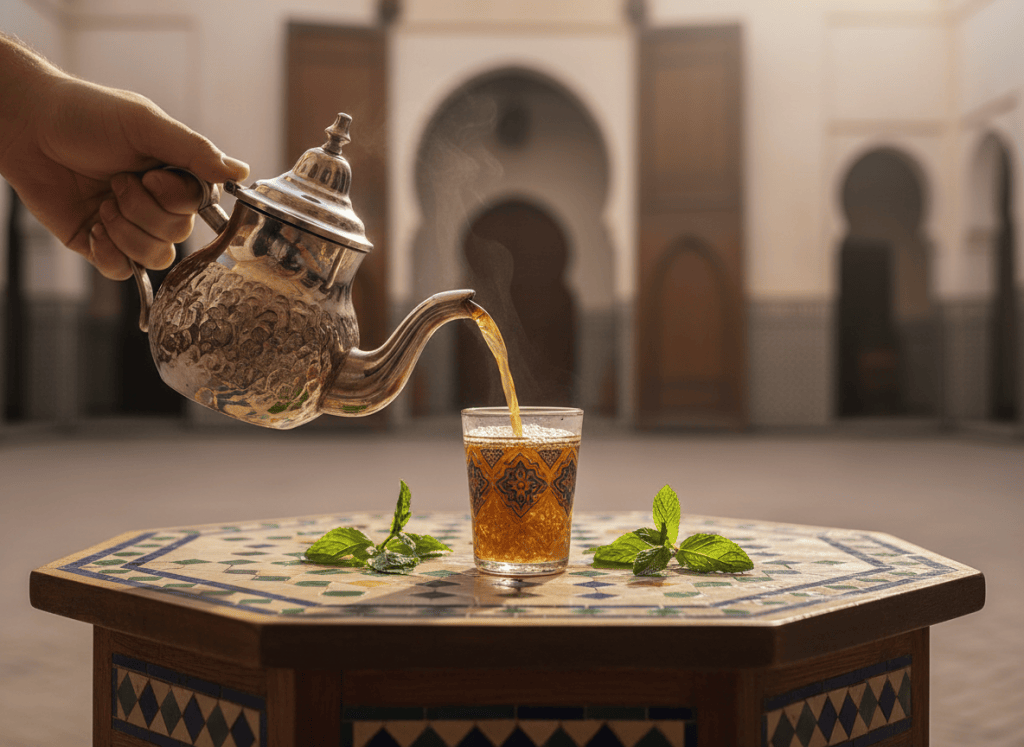
A silver teapot rises above a small glass. A thin stream of tea catches the light. Fresh mint perfumes the air, and a guest is invited to sit a little longer. In Morocco, tea can be an everyday refreshment—but it is also one of the most recognizable gestures of welcome.
The scene looks effortless. Behind it, however, are histories of trade, changing tastes, hospitality and a practice that means different things in different homes. To understand Moroccan mint tea, begin not with a recipe but with the relationship between host and guest.
A welcome served in a glass
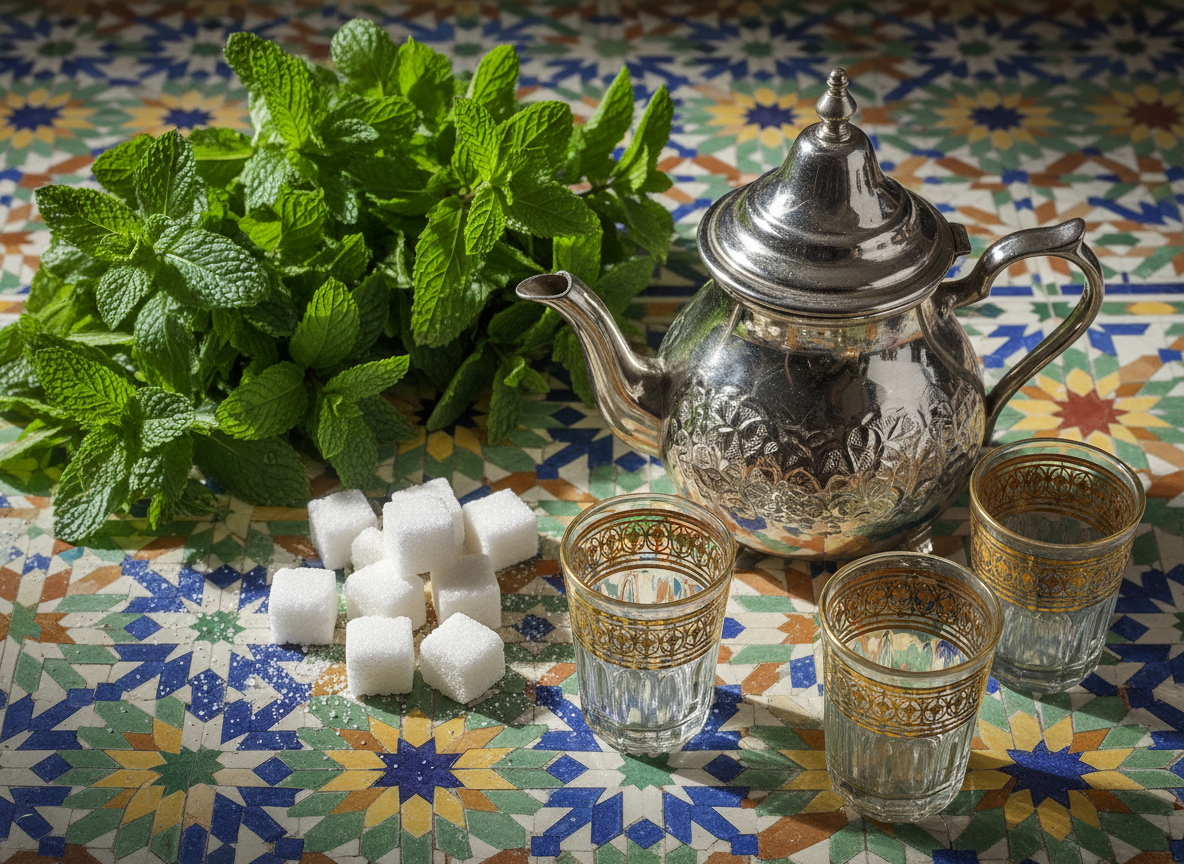
Moroccan tea is often made with green tea, fresh spearmint and sugar, though the balance varies by family, region and occasion. Some people prefer it less sweet, and other herbs may appear seasonally. There is no single version that speaks for every Moroccan household.
Serving tea offers a natural pause. Visitors can settle in, conversation can begin, and a host can communicate care without a formal speech. Tea may be offered during family visits, business conversations and casual gatherings. Its significance comes as much from the shared moment as from the ingredients.
Why pour from above?
You may have seen Moroccan tea poured from a teapot held high above the glass. This technique can help aerate the drink, mix ingredients and produce a layer of bubbles at the surface. It is also a visually memorable part of serving. Not every pour is theatrical, and not every household follows the same routine.
The teapot and glasses themselves can be objects of craftsmanship. Engraved metal, colored glass and patterned trays turn an ordinary table into a small display of artistry. Yet beautiful equipment is not a requirement for generous hospitality.
The surprising global story inside the pot
Tea leaves are not native to Morocco. Green tea became increasingly important there through international trade, particularly in the nineteenth century. The drink that now feels deeply rooted in Moroccan daily life is therefore also a reminder that cultures develop through exchange. Imported tea met local preferences for mint, sweetness and sociability—and a distinctive custom grew around the combination.
This is a useful antidote to the idea that traditions are frozen in time. What a community considers familiar and authentic may be the product of centuries of adaptation.
More than a recipe
If someone offers you tea in a Moroccan home, accepting may be a friendly way to participate in the visit, although individual circumstances and preferences always matter. Ask questions, follow your host’s lead and avoid treating a living custom as a performance staged for visitors.
And if you make mint tea at home, the most meaningful part may be the simplest: invite someone to share it. The glass can be small. The welcome need not be.
A little more to explore
For cultural and travel context, explore the Moroccan National Tourism Office. For broader background on tea’s international history, consult museum and historical resources such as the Victoria and Albert Museum.
Editorial note: The images in this article are AI-generated illustrations, not photographs of a particular household or ceremony.


Leave a Reply