Cloth does not always begin with spun thread. In the Baganda barkcloth tradition of Buganda, in Uganda, inner tree bark becomes a soft material through beating. The Victoria and Albert Museum identifies the source as the mutuba tree, Ficus natalensis. The useful first question is therefore about construction: how did a sheet become cloth, rather than how were threads woven together?
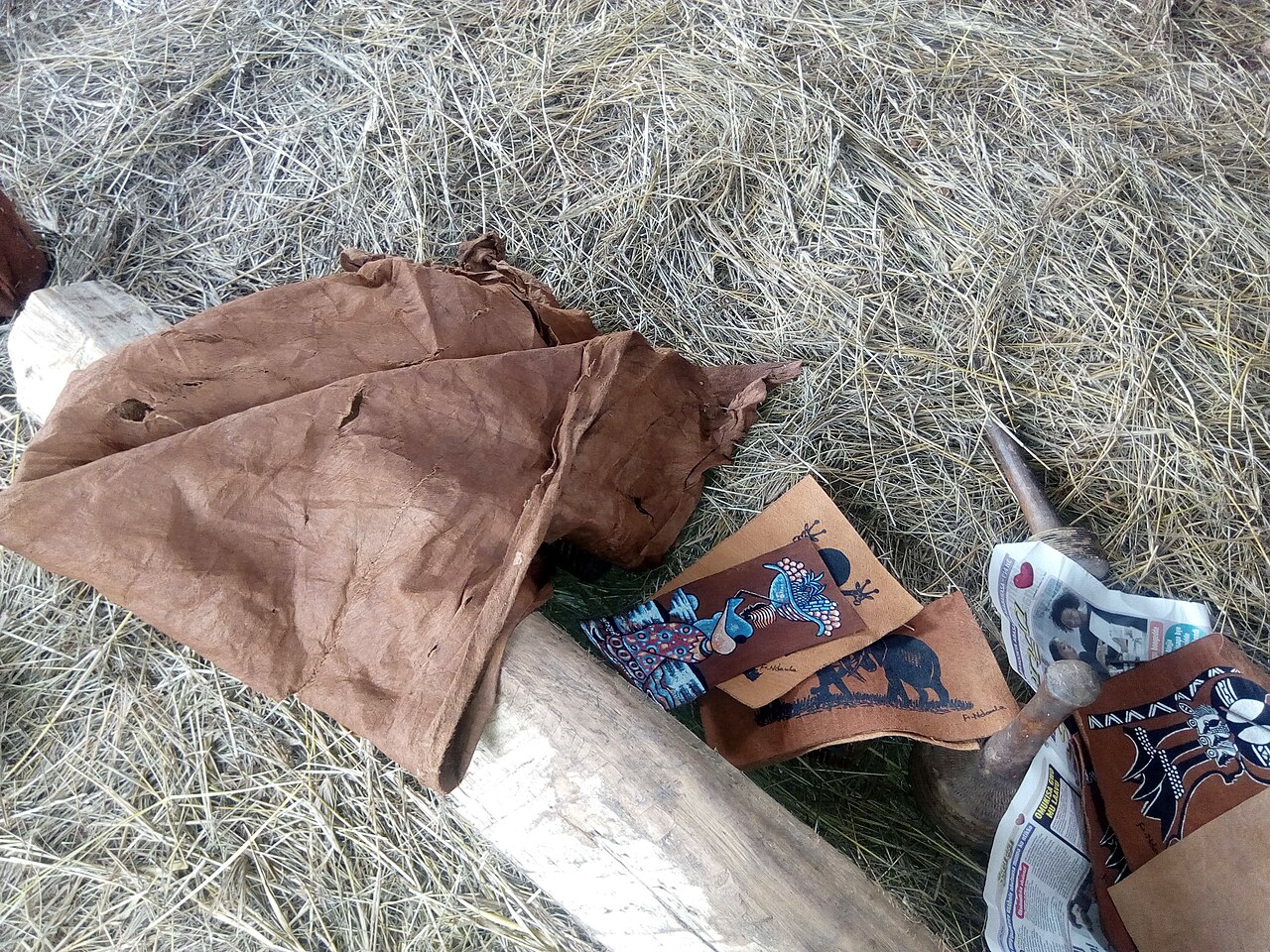
A sheet made by beating
The Victoria and Albert Museum describes harvesting inner mutuba bark during the wet season and beating it to produce a fine, soft texture. Cambridge University Museums independently describes repeated work with grooved wooden beaters. The tool’s action is central to the textile: it is not simply a decorative finish on already woven fabric.
Baganda, Buganda and Uganda: keep the names distinct
Baganda names a people; Buganda names their kingdom. Uganda is the country. The Victoria and Albert Museum explicitly locates the barkcloth tradition with the Baganda of Buganda, while National Museums Scotland discusses production among Baganda in the Masaka region of southern Uganda. Naming the community preserves information that the broad label “African fabric” would erase. It also avoids suggesting that every Ugandan community shares an identical textile tradition.
A material can have more than one social life
National Museums Scotland describes reddish-brown barkcloth rectangles and their continuing association with monarchy and royal heritage. The Victoria and Albert Museum, meanwhile, documents a barkcloth dress and sash from Buganda, dated 1956–57, in its collection. The museum presents the garment in the context of everyday fashion in the 1950s. Those accounts should be read together: a culturally significant material need not be confined to one type of occasion.
That distinction helps a reader avoid an easy mistake. A museum object’s date, a wearer’s occasion and a material’s longer history are separate facts. The photograph here shows the material’s colour and folds; it cannot establish the maker’s identity or the purpose of the display. We do not assign those details from appearance.
A contemporary example, with its own attribution
National Museums Scotland also records a 2019 jacket-and-skirt outfit by designer Jose Hendo that combines Ugandan barkcloth with recycled tweed. This is a specific documented design, not evidence that all barkcloth clothing follows that combination. It offers a concrete reminder that heritage materials can enter contemporary design without making their community history irrelevant.
Three ways to read a barkcloth label
Material: does the label name barkcloth, the tree species, or a different fabric? Making: does it describe beating rather than weaving? Context: does it identify a maker, community, date and use? These are our reading questions, drawn from the museums’ descriptions. They are not a test of whether an individual garment or person is culturally “authentic.”
If you see a piece in an exhibition or shop, ask what the seller or curator can document. A material name alone does not establish sustainable harvesting, the maker’s payment or permission to reproduce a design. Likewise, “traditional” should invite a more precise explanation rather than replace one. This introduction does not teach harvesting or ceremonial practice.
To compare how materials shape creative work, read Chechen istang felt carpets and Japanese furoshiki wrapping. These are distinct traditions; the connection is a question about making and use, not a claim of shared origins.
Sources and further reading
Victoria and Albert Museum: the “Beautiful in Barkcloth” section; National Museums Scotland: barkcloth across the world; Cambridge University Museums: working with the Ugandan barkcloth collection. Sources checked 24 October 2026. Cambridge’s indexed institutional description corroborates the beaters; its full page returned a temporary fetch error during checking.
AI-assisted editorial notice: Prepared by People & Origins with AI assistance for research and drafting. The label-reading guide is original synthesis, not firsthand reporting or specialist testimony. Read our Editorial Policy & AI Transparency.


Leave a Reply