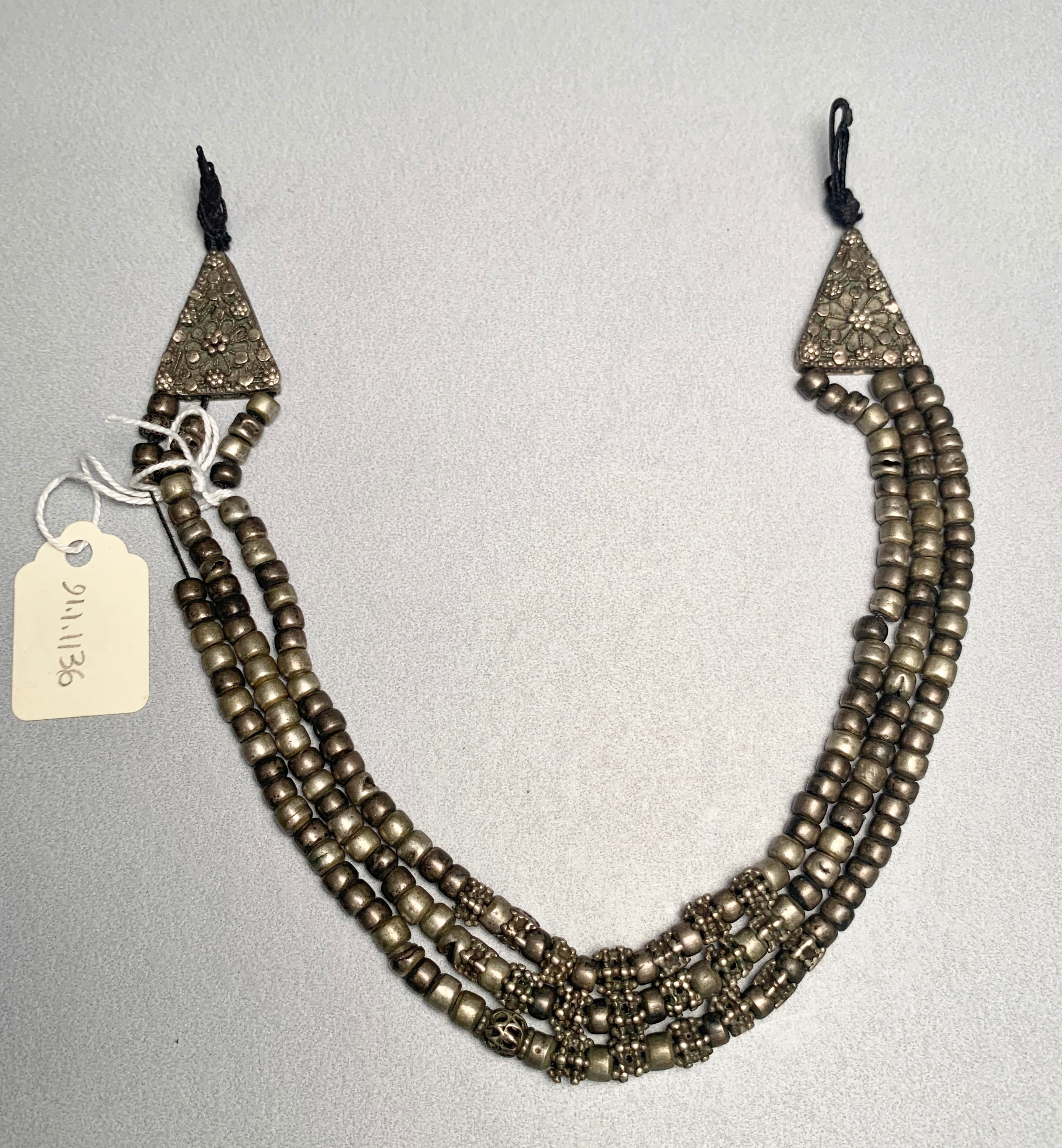
A necklace can be both ornament and a record of skilled making. Two museum collections offer a careful starting point for exploring Yemeni silver jewelry without treating one object as representative of everyone in Yemen.
Start with the object
The Metropolitan Museum of Art’s necklace 91.1.1136 is catalogued as silver, made in Yemen in the nineteenth century. Its curatorial account connects the multi-strand form and triangular terminals to wider trading connections. That is an interpretation of this particular design, rather than a rule for all Yemeni necklaces.
The Walters Art Museum’s Necklace with Coral Beads, 57.2358, dates to the late nineteenth or early twentieth century and combines silver with coral. Its account describes elaborate silver jewelry worn by both Jewish and Muslim women, especially for weddings and other festive occasions. Both museums recognize the important contribution of Jewish craftspeople to this silverwork tradition.
Three questions for looking closely
First, what does the catalog actually identify: material, date, place or maker? Second, how is the necklace arranged: repeated strands, hanging elements or contrasting materials? Third, which meanings come from a museum’s explanation rather than from the appearance alone? These questions separate visible details from interpretation. A photograph cannot establish an unknown wearer’s religion, family history or personal beliefs.
The two objects also invite comparison without ranking one as more authentic. A difference in material or arrangement is a reason to ask about a particular maker and setting, not to imagine a single national jewelry style. This is a museum-based introduction to historical craft, not a description of what every Yemeni person wears today.
Related craft stories
Continue looking at how materials shape design with Chechen istang felt carpets and reading repairs in kintsugi ceramics. These links connect ways of looking, not common origins.
Sources and further reading
The Metropolitan Museum of Art: Necklace, 91.1.1136; The Walters Art Museum: Necklace with Coral Beads, 57.2358. Source-check date: 23 October 2026.
AI-assisted editorial notice: Prepared by People & Origins with AI assistance for research and drafting. This is original source-based synthesis, not firsthand reporting or specialist appraisal. See our Editorial Policy & AI Transparency.


Leave a Reply