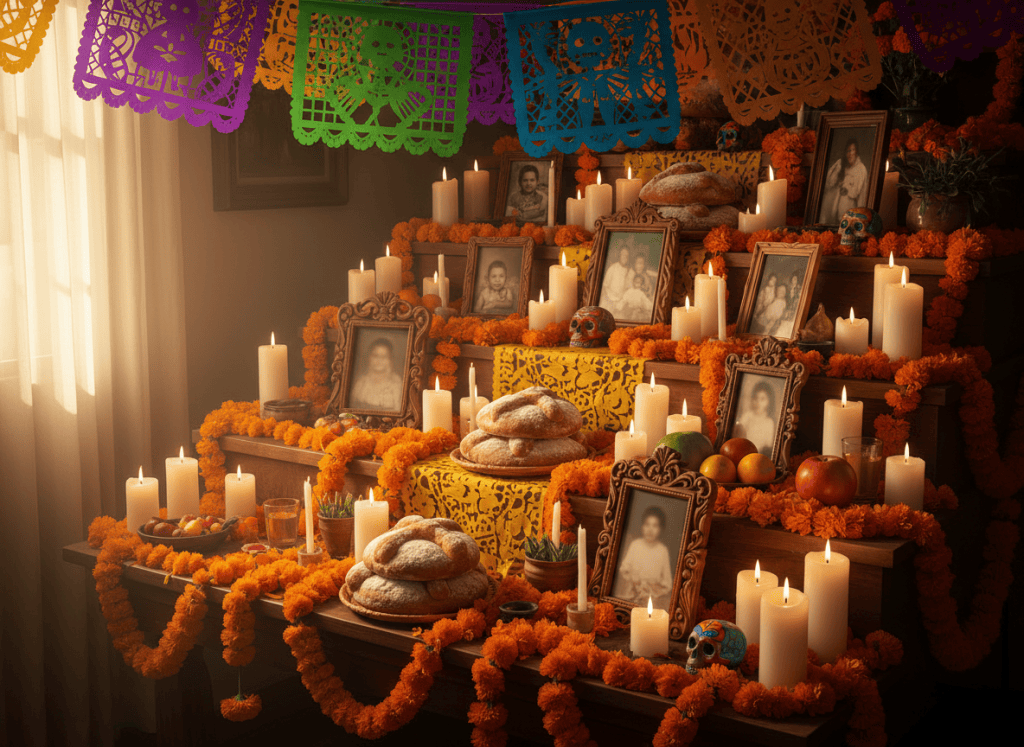
Editorial transparency: This article was prepared with AI assistance and edited for cultural context. It is an educational overview, not firsthand reporting or a claim to represent every community. Illustrative images are AI-generated unless otherwise credited. We welcome corrections through our contact page.
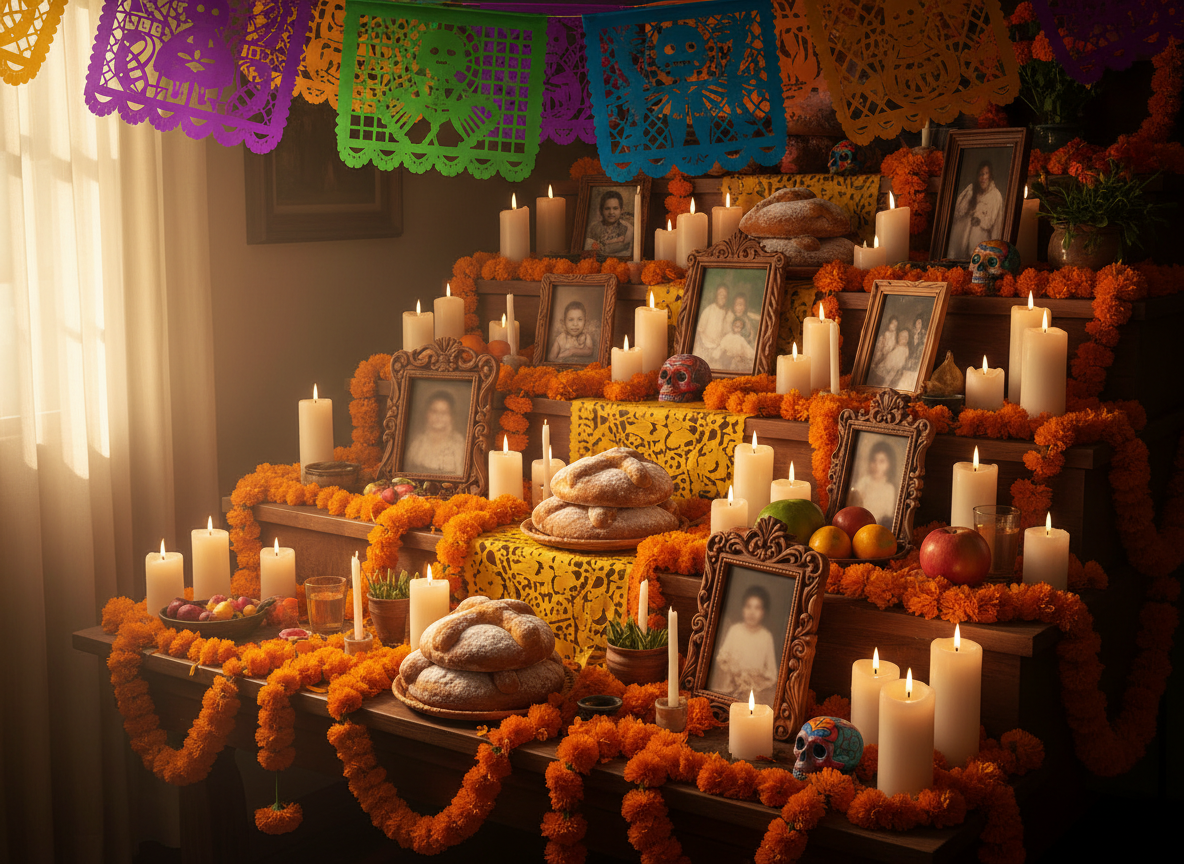
A celebration of memory, not a celebration of death
Bright marigolds, candles, photographs and favorite foods may fill a family’s ofrenda during Día de Muertos, or Day of the Dead. To an outsider, the imagery can seem surprising. For many families in Mexico, however, the holiday is a deeply personal way to remember and honor people who have died.
What goes on an ofrenda?
An ofrenda is an offering or remembrance display. It may include portraits, candles, water, food, flowers and objects associated with loved ones. Pan de muerto, a special bread, is common in many places. The arrangements differ across regions and families; there is no mandatory checklist.
Why marigolds matter
The vivid orange and yellow flowers known as cempasúchil are strongly associated with the holiday. Their color and scent are often explained as helping guide spirits in popular tradition. The flowers also transform homes, streets and cemeteries into places of vivid remembrance.
When it happens—and what it isn’t
Día de Muertos is especially associated with November 1 and 2, although preparations and local observances may extend beyond those dates. Its history reflects complex interactions among Indigenous traditions and Catholic observances. It should not be treated as simply ‘Mexican Halloween,’ even though costumes and skeleton imagery sometimes lead to comparisons.
A living tradition
Families may clean graves, share meals, tell stories or build altars at home. Public parades and tourist events exist, but they do not capture the whole experience. The most meaningful detail is often quiet: remembering someone’s favorite dish or retelling a story so that younger relatives know who they were.
Culture is never one-size-fits-all. Practices vary by community, family and generation; this article offers an introduction rather than a rulebook.
Continue exploring cultures
Curious about how other traditions bring people together? Explore India’s rangoli art and Thailand’s Loy Krathong festival.


Leave a Reply