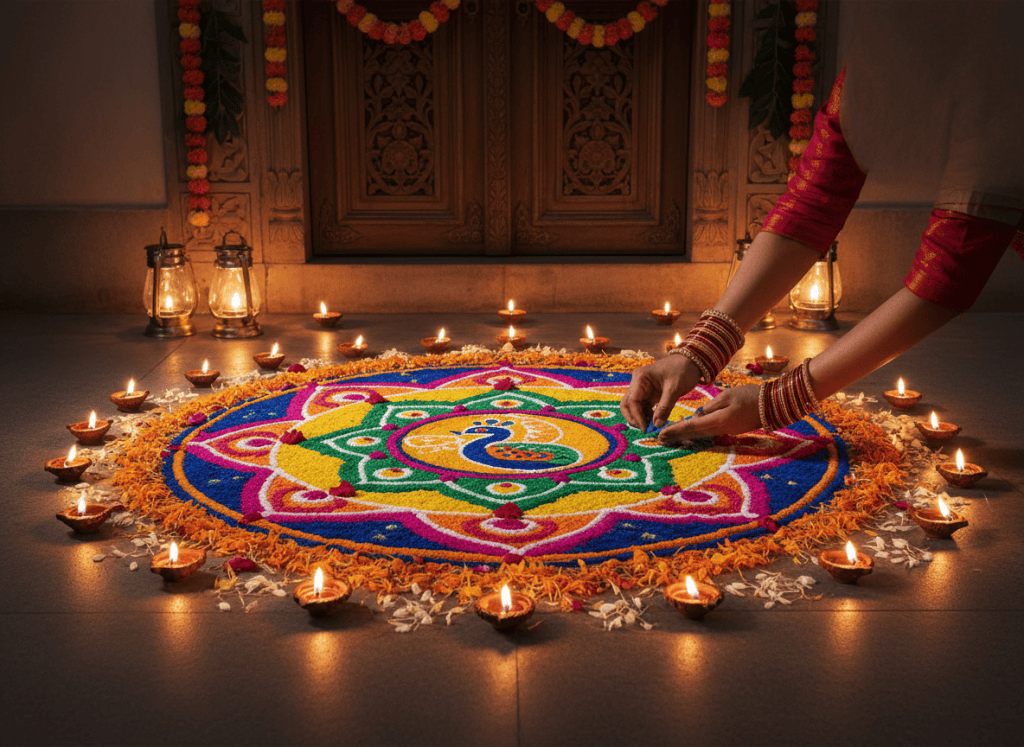
Editorial transparency: This article was prepared with AI assistance and edited for cultural context. It is an educational overview, not firsthand reporting or a claim to represent every community. Illustrative images are AI-generated unless otherwise credited. We welcome corrections through our contact page.
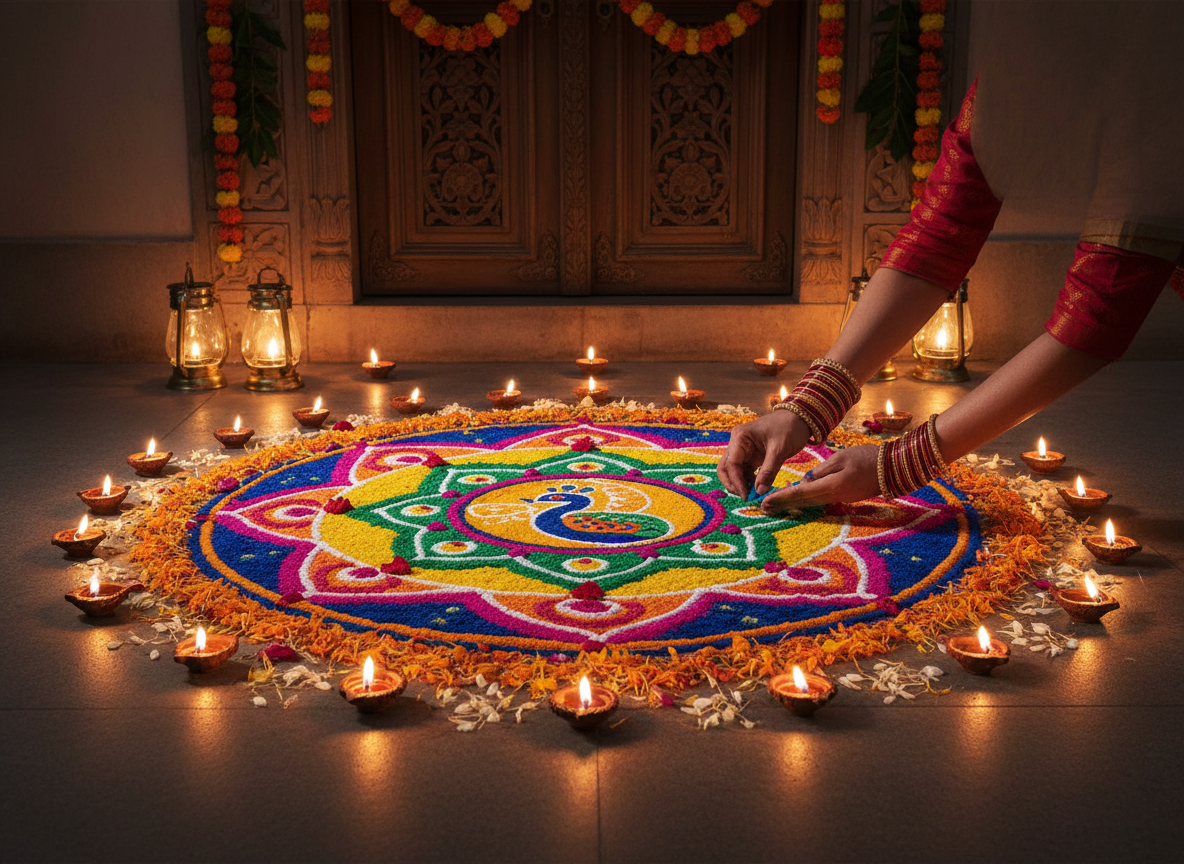
A masterpiece at your feet
Imagine spending an hour arranging colored powder, rice or flower petals into a beautiful design—knowing footsteps, wind or rain may soon change it. That is part of the wonder of rangoli, a decorative practice found in many parts of India, especially around festivals and auspicious occasions.
Welcoming people, welcoming possibility
Rangoli is often made at entrances and courtyards. Depending on region and family tradition, designs may express welcome, celebration, good fortune or devotion. During Diwali, intricate patterns often accompany lamps and festive decorations. But rangoli is not exclusive to Diwali, and not every household follows the same customs.
One country, many visual languages
Regional floor-art traditions have their own names, techniques and histories. Kolam in Tamil Nadu often uses rice flour and rhythmic geometric patterns; other traditions include alpana in Bengal and muggu in parts of southern India. It is important not to flatten these distinct practices into one uniform national style.
Why impermanence matters
Unlike a painting protected behind glass, floor art belongs to everyday life. A design can be remade tomorrow, changed for a holiday or swept away after the celebration. Its temporary nature does not make the effort meaningless. Instead, the act of creating it can become a daily or seasonal expression of care.
The people behind the patterns
Some artists build elaborate, symmetrical compositions; others repeat forms learned from parents and grandparents. Children may help choose colors or place petals. The finished pattern is beautiful, but the shared work—and the knowledge passed from one generation to another—is part of the art.
Culture is never one-size-fits-all. Practices vary by community, family and generation; this article offers an introduction rather than a rulebook.
Continue exploring cultures
Curious about how other traditions bring people together? Explore Mexico’s Día de Muertos and Japan’s Setsubun festival.


Leave a Reply