Editorial transparency: This article was prepared with AI assistance and edited for cultural context. It is an educational overview, not firsthand reporting or a claim to represent every community. Illustrative images are AI-generated unless otherwise credited. We welcome corrections through our contact page.
A strange sound at the doorway
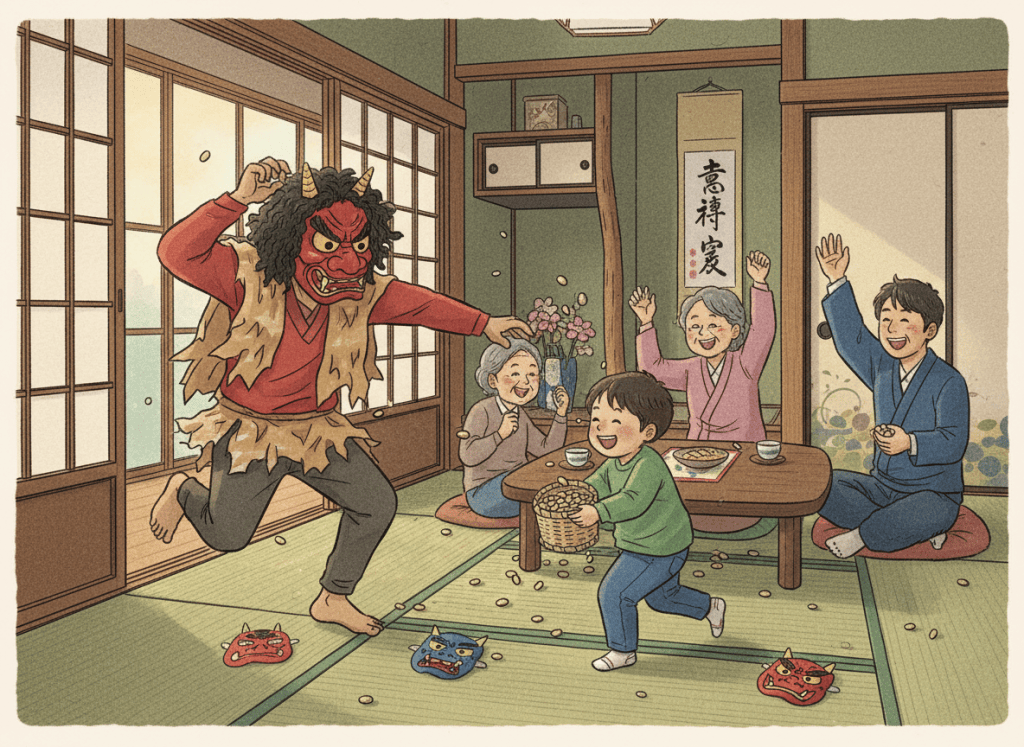
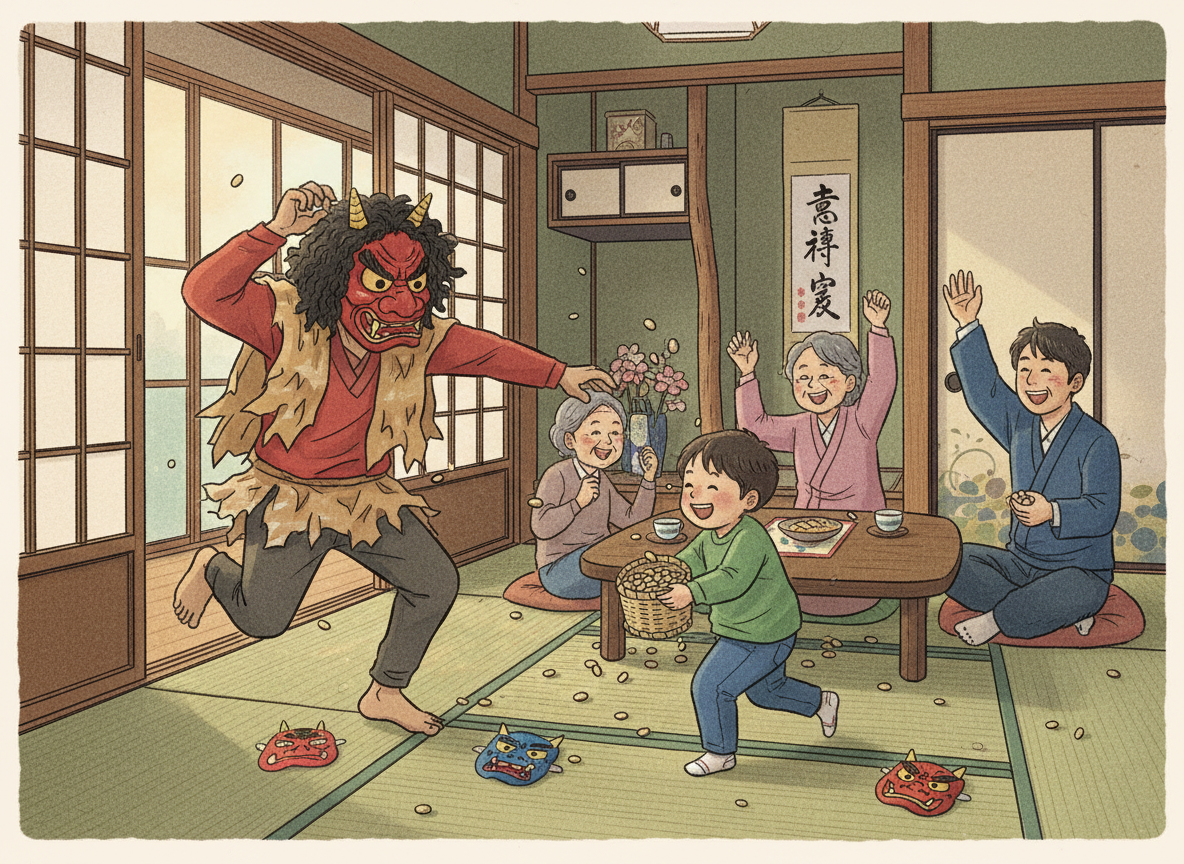
In some Japanese homes around early February, you may hear a cheerful shout: ‘Oni wa soto! Fuku wa uchi!’—roughly, ‘Demons out! Good fortune in!’ Then roasted soybeans are tossed. This is mamemaki, a custom associated with Setsubun, a traditional marker of the changing seasons.
What does Setsubun mean?
The word refers to a seasonal division. In modern popular observance, Setsubun usually means the day before the beginning of spring according to the traditional calendar, often February 3 but sometimes February 2. Its date can shift, so it is worth checking each year’s calendar.
Why beans—and why an oni mask?
The beans symbolically drive away misfortune and invite well-being. In family versions, someone may wear an oni mask, representing a troublesome spirit or ogre, while others throw the beans. Shrines and temples may hold public ceremonies. The mood can be playful, solemn or a little of both.
The lucky direction
Another widely recognized custom is eating ehōmaki, a thick sushi roll, while facing a designated lucky direction for the year. This practice is not equally old or universal across Japan; its modern nationwide popularity has been shaped partly by commerce and media.
The psychology of a fresh start
A ritual can make an invisible change feel tangible. You cannot physically throw away bad luck, but tossing beans, opening a door and speaking a hopeful phrase turns the wish for a better season into something people do together. That is why a small household custom can feel so memorable.
Culture is never one-size-fits-all. Practices vary by community, family and generation; this article offers an introduction rather than a rulebook.
Continue exploring cultures
Curious about how other traditions bring people together? Explore Sweden’s Midsummer celebration and Mexico’s Día de Muertos.


Leave a Reply