Editorial transparency: This article was prepared with AI assistance and edited for cultural context. It is an educational overview, not firsthand reporting or a claim to represent every community. Illustrative images are AI-generated unless otherwise credited. We welcome corrections through our contact page.
A cup that asks you to stay
In many Ethiopian homes, coffee is not simply something to drink on the way to somewhere else. A traditional coffee ceremony invites people to remain, listen and spend time together. The drink matters, but so does the company. Guests are welcomed into a slower rhythm in which preparing coffee becomes part of the social experience.
The ritual begins before the first sip
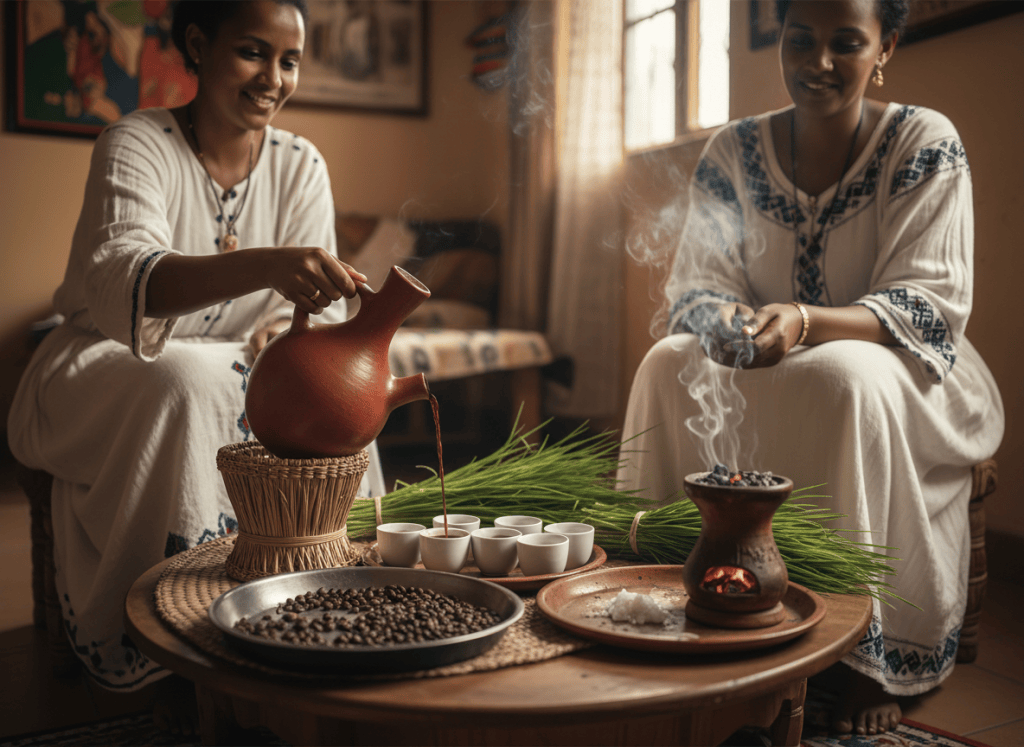
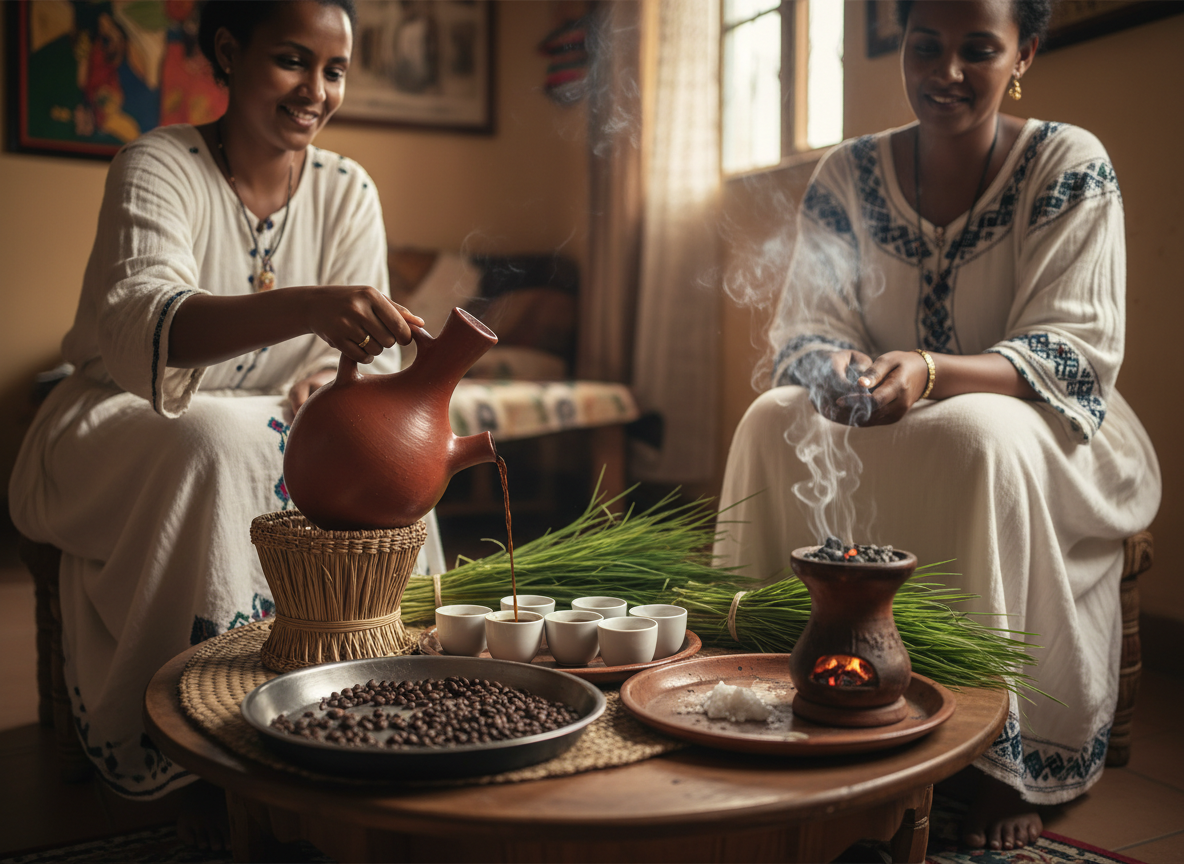
A host may wash and roast green coffee beans, releasing an unmistakable aroma, before grinding and brewing them in a clay pot called a jebena. Small cups are arranged, and coffee is poured with practiced care. Incense and fresh grasses are sometimes part of the setting. Customs differ by household, community and occasion, so no single scene represents every Ethiopian celebration.
Three rounds, many conversations
A familiar description of the ceremony names three rounds of coffee: abol, tona and baraka. The rounds can turn a brief visit into an extended gathering. As people talk between servings, neighbors share news, families reconnect and guests have time to feel included. Some households offer popcorn or other small accompaniments.
Why this feels different
Modern convenience often treats waiting as a problem to eliminate. A coffee ceremony gives preparation its own value. The host’s time becomes a gift, and the guest’s attention becomes a way of receiving it. The experience illustrates how hospitality can be expressed not through extravagance but through patience.
A tradition that continues to change
Ethiopian coffee culture is diverse, and everyday coffee drinking is not always a full ceremony. In cities, cafés and busy homes, people adapt traditions to their schedules. Yet the central idea remains recognizable: coffee can be a reason to gather rather than a reason to hurry.
Culture is never one-size-fits-all. Practices vary by community, family and generation; this article offers an introduction rather than a rulebook.
Continue exploring cultures
Curious about how other traditions bring people together? Explore India’s rangoli art and Thailand’s Loy Krathong festival.


Leave a Reply